

Australia has one of the highest rates of allergies in the world1
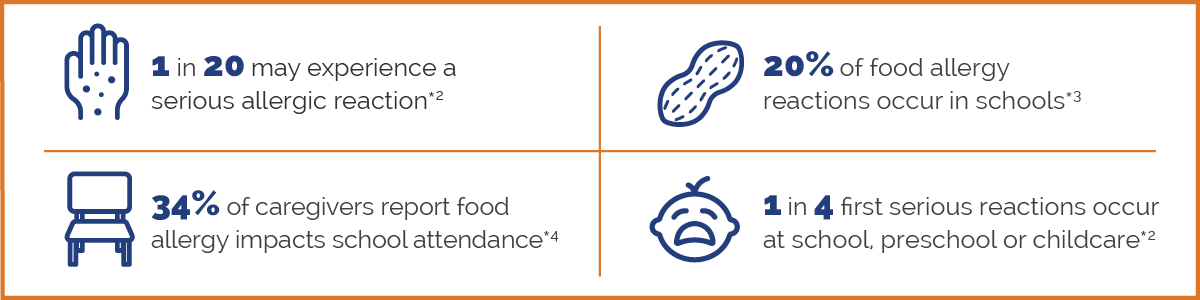
*Source data are based on a US publication. Prevalence estimates and demographic characteristics may differ in Australia.
Anaphylaxis in Australian schools
To better understand how schools manage the risk of anaphylaxis, Viatris commissioned a national online survey of 201 Australian teachers, principals and school leaders in 2025, representing 188 schools.5
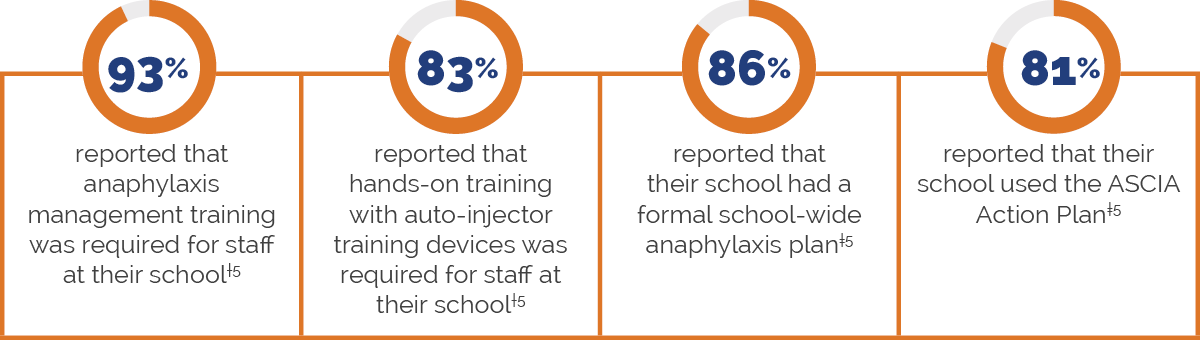
†Q: Are the following types of anaphylaxis management training currently required for staff at your school? Theoretical training; practical/hands-on training (using auto-injector training devices). ‡Q: Do you have a current school-wide formal anaphylaxis plan at your school? Options: Yes - ASCIA Action Plan; Yes – non-ASCIA Action Plan; No; Don’t know.
Where schools can go further
While schools have established strong foundations, the survey identified several opportunities to further strengthen preparedness:
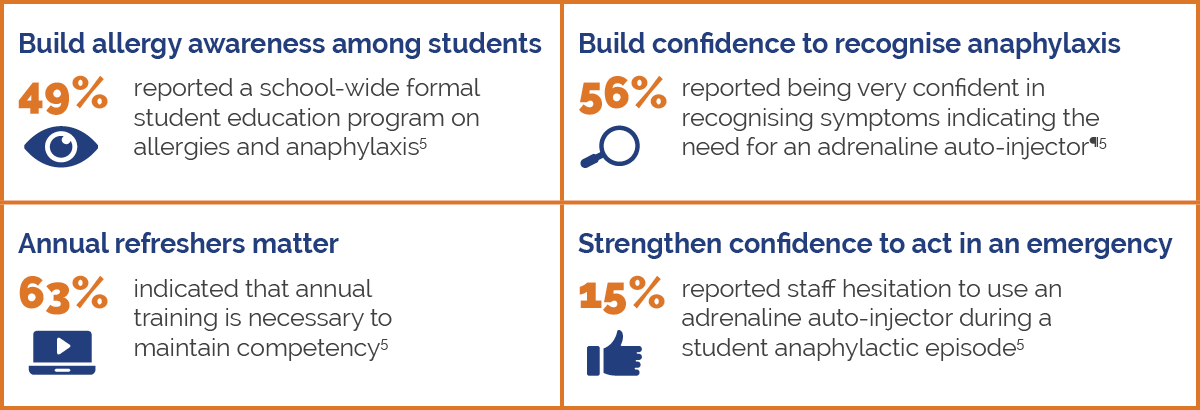
¶Q: How confident do you feel completing tasks around adrenaline auto-injector use? Scale: 1 (not at all confident) to 10 (very confident).
Is your school doing all it can?
- Staff are trained to recognise and respond to anaphylaxis6 – see more about signs and symptoms and what to do if you think someone is having a reaction.
- Training is refreshed regularly6 – practise with an EpiPen Trainer, watch the How to Use EpiPen video and access online training at ASCIA.
- Students are educated about allergies and inclusion6 – learn more about these topics here.
- Resources and action plans are readily available6 – browse our downloadable resources and visit ASCIA for action plans.
- Emergency devices are monitored and maintained6 – ensure all school- and student-owned pens are registered for expiry reminders.
Data presented are derived from an internal market research survey commissioned by Viatris Australia in 2025. Findings have not been published in a peer-reviewed journal and should be interpreted within the context of the survey methodology and sample population.